
The Safety Manual Nobody Gives Men

Lights, Camera, Restrictions!
Imagine a Bollywood film where the hero gets a 10 P.M. curfew, must share his live location with his mother, and has to explain why he's wearing that shirt. His phone rings for the fifth time. “Beta, where are you? Who's with you? When will you come home?”

Meanwhile, the heroine is backpacking across snow mountains, dancing in the rain, and posting sunsets with captions like "Finding myself .
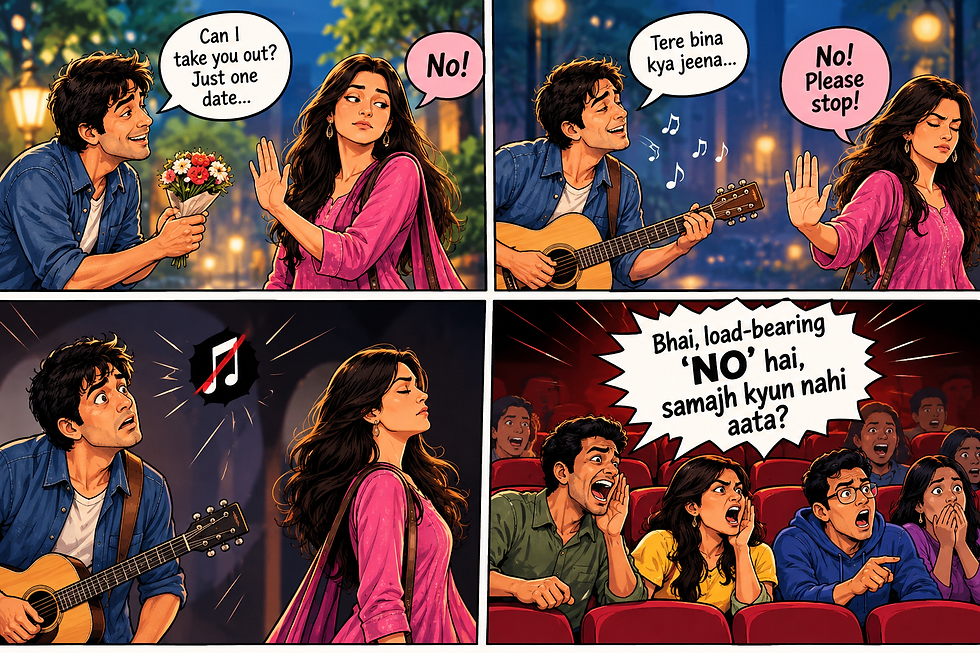
The hero tries to hit on her, but she says no. He pulls out an acoustic guitar to try again. She gives him the stare. The grand background score vanishes, and the entire theater turns to him: “Bhai, 'No' is an answer, not a password you keep guessing!”
Now, imagine this in real life. Can it happen anytime soon, or will it remain just a Bollywood script or a dream sequence?

We tell girls to avoid certain roads, certain clothes, and certain hours. why does parental worry and safety come wrapped in the form of restrictions for women?

How often do we tell boys that a woman's “no” isn't the opening scene of a love story? How often do we ask them to speak up when a friend makes an uncomfortable joke or refuses to take rejection seriously?

For nine nights, we celebrate Durga, the goddess who defeats demons. On Ashtami, we welcome little girls as Devi, wash their feet, and serve them halwa-puri. Here is the twist in the story. Fast forward a few years, and that same "goddess" is hit with: “Don’t go out alone,” and the ultimate Indian final boss question: “Log kya kahenge?”
Parental concern is natural. But why does anxiety for daughters always construct a fortress of restrictions, while accountability for sons remains optional?
CONCLUSION
Let's scrap outdated dress codes and unfair restrictions. The new manual needs just a few rules: Respect a “No.” Stop glorifying stalker-style romance. Apply the same standards of freedom and responsibility to daughters and sons.


Comments